

Private Woodworking School
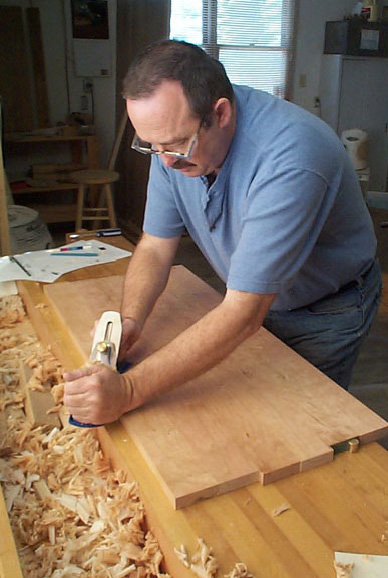
As opposed to a more typical woodworking school, private one-on-one woodworking instruction in Hendrik’s workshop can only be compared to a traditional apprenticeship program, but a super condensed version. Instead of struggling on your own for several months or years with a regular apprenticeship, Hendrik’s private courses are, effectively, minute-by-minute hands-on guidance from an experienced and talented mentor. You do not work alone on your projects while Hendrik works on his own work. You work together at all times so that every possible bit of feedback is given to you instantly, and every bad habit is broken before it has even started. This is true mentorship and highly intensive skills training. It truly doesn’t get any better than this.
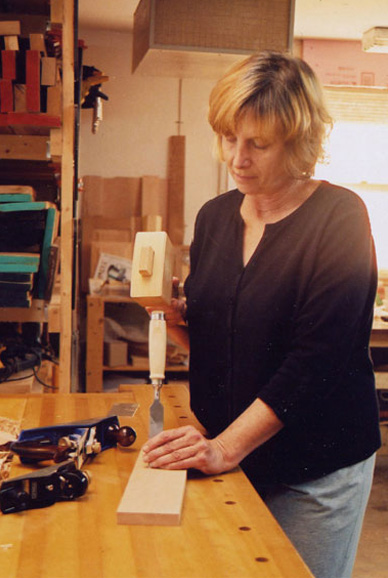
Hendrik has a portfolio of projects completed by former and current students. Although you are free to choose one of those projects, Hendrik is quite comfortable with allowing you to bring in your own design ideas or pictures from woodworking magazines, etc. Often, that is a good way for you to learn the design side of the craft, as Hendrik will spend your first lesson turning your idea into a workable design, taking into account appropriate building techniques and joinery.
Some of Hendrik’s local students take lessons on an hourly basis, with the learning process spread over a period of time. But others, especially those who travel for long distances, prefer to take intensive courses.
“There is nothing like learning along-side a professional, especially in an intensive situation,” says Hendrik. “For a full week or more, the student is immersed in the work that I have come to love. Once the student commits to an intensive course, I clear that block of time from my normal business schedule to do nothing but teach that one student. It also gives serious amateurs who live farther away an opportunity to make a ‘working holiday’ out of it.” Hendrik will put the student in touch with local bed & breakfasts or inns and suggest places to eat while taking the course. Hendrik says that his students are usually just serious hobbyists, although he is increasingly contacted by people who want to get into woodworking as a career.
Gift Certificates Available
- Project-based Intensive Course
- Skills-based Intensive Courses
- FAQs
- Policies re: Intensive Courses
- Hendrik’s Philosophy on Teaching
Two basic approaches to Hendrik’s intensive courses
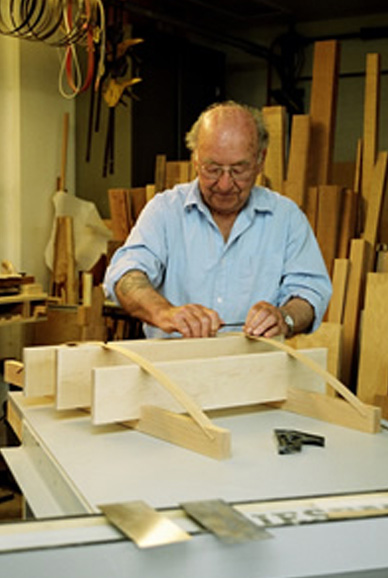
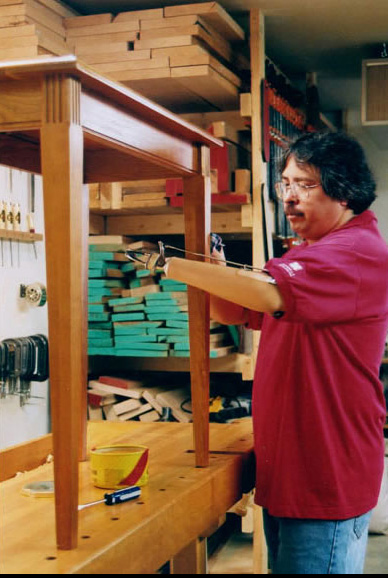
Project-based Intensive Course
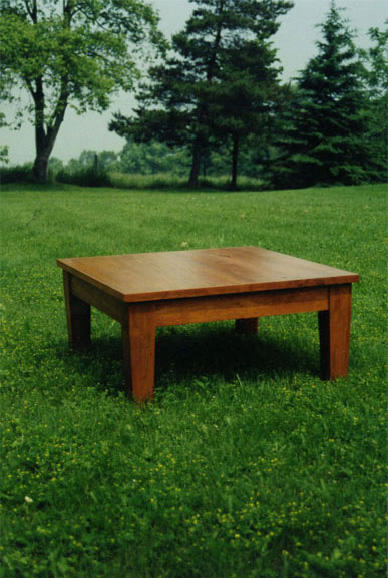
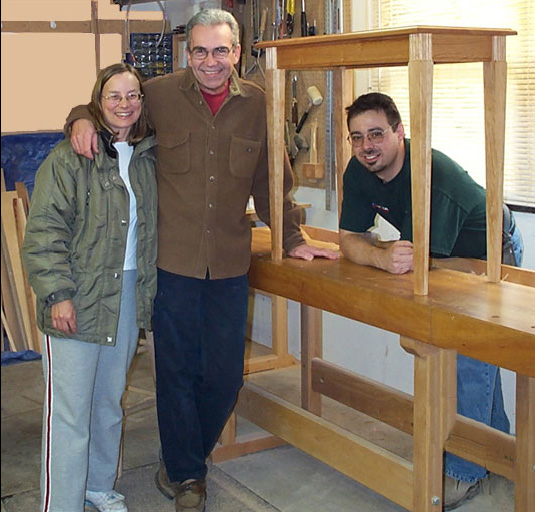
The first is called a “Project-based Course” and is suitable for beginner to intermediate woodworkers wanting to go home with a project under their belt. The standard course involves 7 days of working one-on-one with Hendrik, building the black cherry side table shown below. Although the table is a wonderful project to take home, the emphasis is on skills and safety throughout. By the time you complete the course, you’ll be very comfortable using most of the machines in Hendrik’s workshop. You will use the tablesaw, jointer, thickness planer, drill press, router (hand-held and in a router table), random orbit sander and hand plane. You also learn to do edge-gluing and face gluing for leg blanks. And you’ll never look at wood quite in the same way again. You’ll learn a lot about “reading the grain” and generally how wood behaves.
The other thing to consider is that this project-based course has the unique ability to “put it all together”, so to speak. In other words, Hendrik could teach you all of the components separately in one-on-one sessions or in a seminar format. But that doesn’t have the same effect as learning all of the steps one by one, in the correct order, and finishing up with a piece of furniture in the end. Furniture building is about more than just a list of loosely linked procedures. It’s a whole process and it’s invaluable to see one project through from rough lumber to finishing.
This course can be lengthened to incorporate more time-consuming techniques such as mortise-and-tenon joinery or even to add a small drawer to the table.
The beauty of the course is that you go home with a stunning piece of cherry furniture as well – the same table you’ll see on the “Gallery of Work” page of this website. The project is shown there as Hendrik’s “Tapered Leg Side Table”.
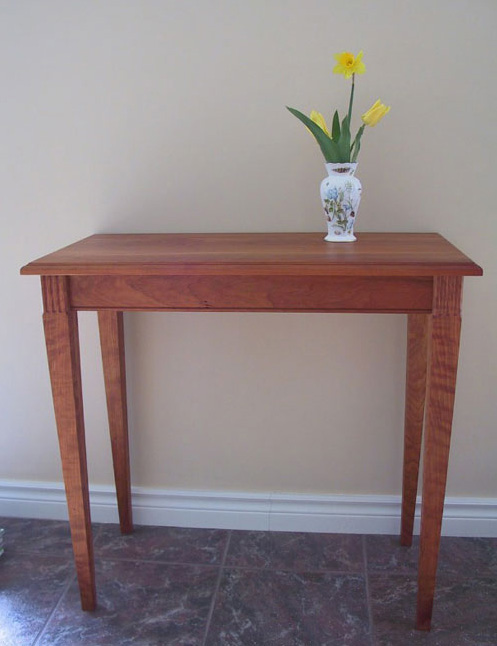
Decor Magazine, Oct. 2002
During this 56 hour course, you’ll learn many of the basics required to build fine furniture.
Skills-based Intensive Courses
a.k.a.
“Buffet-Style” Customized Intensive Courses
The second approach is a purely skills-based course. Hendrik now offers customized intensive courses that last from 5 to 30 days in length and focus exclusively on acquiring skills rather than on building a project. You go home with an armload of joinery samples, perhaps a drawer, a set of sharp chisels and a finely fettled handplane — not a project. But you go home with many new skills, some new joinery techniques under your belt, and a strong will to continue perfecting your skills at home.
This kind of intensive course is still suitable for a complete beginner, but might be more enticing to an intermediate woodworker compared to the cherry side table course. The skills-based course is also vital for people flying in for courses from a great distance away, since the cost of shipping a relatively large completed project home can be prohibitive. This second approach is a very intense program involving numerous techniques, cramming as much learning into a short time span as possible.
The beauty and flexibility of this second approach is that the student can pick and choose from a list of topics, piecing together a customized course of any length from 5 to 30 days. Because you get to choose the topics according to your fancy, Hendrik calls this program his “Buffet-Style” Customized Intensive Courses.
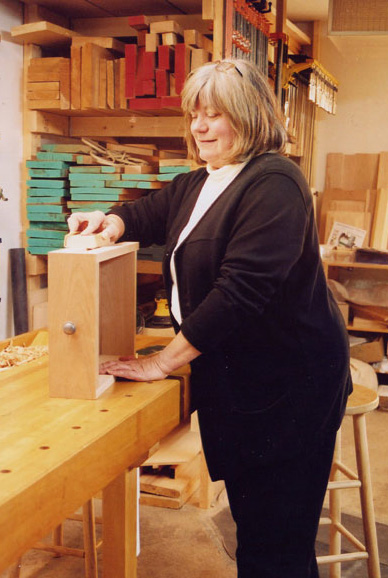
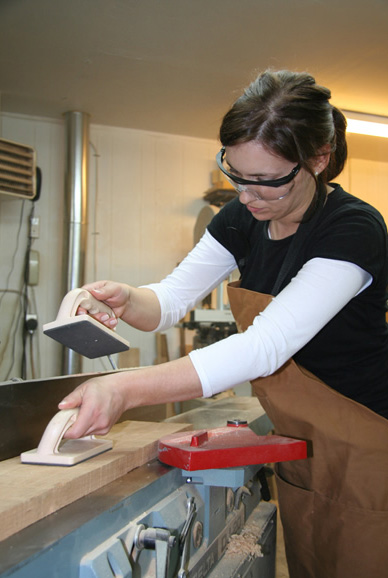
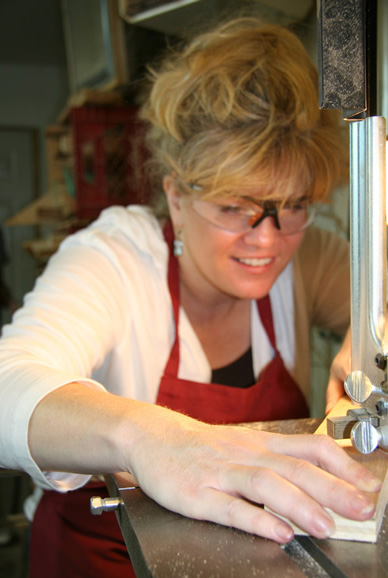
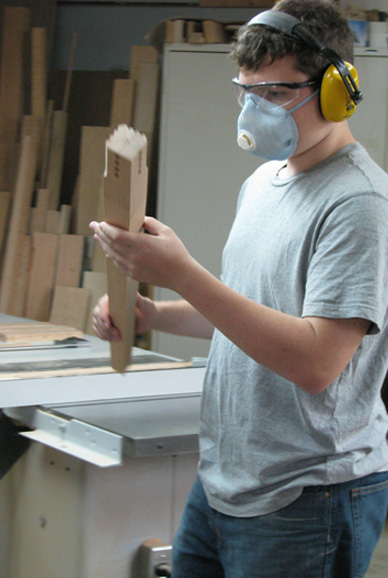
Here is a list of the subject-matter that you can choose from to piece together an intensive course of any length:
- Setting Up a Home Workshop (1/2 day);
- Tuning Up Power Tools (e.g. changing and setting jointer and planer knives, band saw tune-up, etc.) (full day)
- From Concept to Plan (1/2 day);
- Wood Science and Design (1/2 day for abbreviated version, full day for full version including furniture tour);
- Table Saw Safety — proper techniques and safety training (full day);
- Milling Rough Lumber — proper technique using the jointer and planer (full day);
- Using your Bandsaw and Resawing on the Bandsaw (1/2 day);
- Basic Router Operations (a router and router table overview) (1/2 day);
- Making Templates and Template Routing (1/2 day);
- Tuning Up Hand Planes (full day);
- Sharpening Hand Plane Irons and Chisels (1/2 day for abbreviated version, full day for in-depth hands-on experience, including card scraper tune-up and burnishing);
- Hand Planing Techniques & Using Scrapers (1/2 day);
- Edge-gluing a Table Top and Hand Planing it Flat (1/2 day);
- Breadboard Ends (full day);
- Finger Joints on the Table Saw (1/2 day);
- Dowel Joinery and Dowel-reinforced Mitre Joints (1/2 day);
- Cutting Accurate Dados and Rabbets by Router and Table Saw (1/2 day);
- Making Splined Mitre Joints (1/2 day);
- Making Simple Mortise and Tenon Joinery (full day);
- Making Through Wedged Mortise and Tenon Joinery (1/2 day if already taking simple mortise and tenon joinery component);
- Bent Laminations (includes making the form, resawing laminations, glue-up, clean-up and parts completion) (2 days);
- Hand-cut Dovetails (both through and half-blind) (1 1/2 days);
- Making Tapered Table Legs (1/2 day);
- Making Your Own Mouldings (full day);
- Making Large Cove Mouldings on the Table Saw (1/2 day);
- Making Raised Panel Doors (full day);
- Making Drawers (full day);
- Fitting Doors and Drawers (full day);
- Making End Grain Table Tops & Butcher Blocks (1 1/2 days);
- Working with Plywood (full day);
- Veneering with a Vacuum Pump (1 1/2 days);
- Preparing the Surface and Staining (1/2 day);
- Hand Finishing and Rubbing Out (1/2 day);
- Master Level Hand Finishing Series (includes surface preparation, staining, finishing and hand rubbing techniques)(2 days);
- French Polishing Technique (1/2 day);
- Starting and Running a Woodworking Business (full day – small business consultation rate applies to this component).
A. All the tools you need are here, tuned and ready to go. If you’re learning to tune a hand plane or sharpen chisels, you’ll need to bring your own for those kinds of tasks. But you cannot buy them here. I can recommend some tools to you, but I don’t sell tools.
A. Since most of my private instruction is done one-on-one (just you and me), we simply pick a block of time that works for both of us. It’s that simple. I offer my courses all year round, with the exception of a few holiday periods.

Unbiased Tool Purchasing Advice
Hendrik tries very hard not to incorporate tool sales into his business. A person who sells a tool can’t always be counted on for unbiased purchasing advice. When you ask Hendrik what tool he recommends, his advice is based on his own experiences and knowledge, not on profits he might be able to earn on tool sales. Many woodworking schools have a required tool list for their courses, which sometimes lists tools you don’t really need, or tools of a very high price, where you might be just as well off with a less expensive brand. Hendrik’s opinion is that selling tools and giving out tool purchasing advice really don’t go together well.
Small Group Instruction Available
Contact Hendrik for pricing. While Hendrik offers one-on-three instruction and one-on-two instruction, most people who take his courses prefer the one-on-one format. Hendrik will not try to pair up complete strangers to take courses together, as their interests and timetables are difficult to co-ordinate. But he has taught family members or friends together – people who come to him as a pair or threesome wishing to take one course together.
Hendrik’s Philosophy on Teaching
“My view on my teaching has always been to empower people by giving them knowledge,” Hendrik says. “It gives me such pleasure to see an amateur, or perhaps a woman who has never had the opportunity to try woodworking, excel and find a hobby that will give them great satisfaction for years to come. The idea is to give the student a grounding or some basics so that he or she can become a self-learner. In time, the student will become more self-sufficient and learn not only from me, but from books, magazines and just plain ‘the hard way’. There is definitely something to be said for ‘learning by doing’.”
And he goes on to say, “My goal is to spend those first few projects teaching a framework of skills based on the project at hand. I concentrate on instilling a desire to achieve accuracy. I encourage the student to concentrate on accuracy and safety at the same time, as both must be present if you are going to enjoy this craft.”
“The learning process is more important than the actual project being built. What is important is that you are learning methods, approaches and ways of thinking that will allow you to design and build your own designs in future.”
“My goal is that after getting a groundwork from which to start, you’ll make a decision on whether you are serious about pursuing this craft. If you’re serious about it, then you’ll start setting up or making improvements to your own home workshop. Slowly, but surely, you’ll do more and more of the work alone in your own shop while coming to me on a more sporadic basis for advice. Eventually, I hope to see you only once every few months when you need some advice on a more advanced technique that you are ready for. Slowly, my role changes from teacher to mentor or sounding-board.”
“In fact, due to the time involved in building any fine project, it is necessary that your projects with me be on the smaller side. You learn the techniques on the smaller pieces and then use the knowledge that you gain on your own larger projects. Larger projects should be tackled at home on your own time, where you are not paying me by the hour.”

Students with Learning Challenges,
Special Needs and Disabilities,
including Children
Not all children do well in a structured school environment. They might need to try more creative pursuits that involve “doing”, in a hands-on way, rather than memorization. So perhaps woodworking is more suitable for your child than English and history, for example.
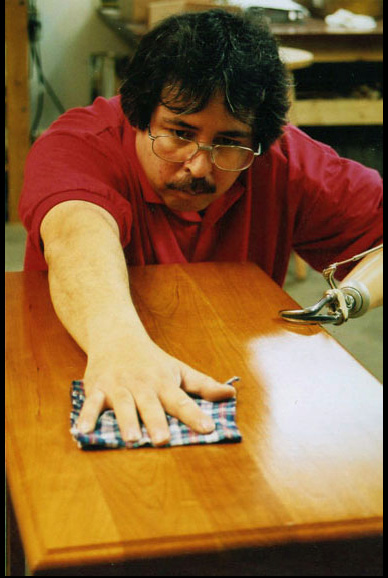
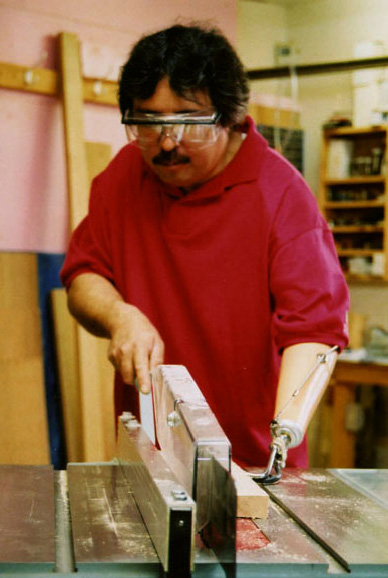
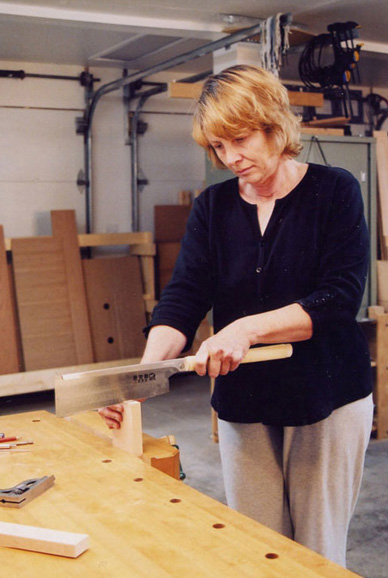
My courses are taught one-on-one, customized to your child’s learning speed. I’ve taught teens with ADHD, anxiety, depression or other learning challenges, as well as adults who are deaf, missing a limb, or similarly struggle with ADHD, anxiety, PTSD, depression and so on. While most of my young students are teens, I’ve taught those as young as 8, 10 or 12 as well. And if you suffered from CSA or COCSA, I’ve got you.
Given that most young people today have lots of experience with technology but no idea how to use a hand tool or machine, my courses give them a sense of what can be done to build real objects with their hands. I’ve also taught such courses in pairs, such as father-daughter, grandmother-grandson, etc. An amazing bonding opportunity! How long will it be before your children and grandchildren are all grown up and “too busy” to do much of anything with you!? Now is the time!
Let‘s face it. Not every young person is meant to go to university to become a doctor, lawyer or engineer. There is no shame in working with your hands, so let’s get some useful real world skills into the hands of our youngsters now.
At the top of this webpage you’ll find a testimonial from the mother of a boy who learned both woodworking and cooking with me from the age of 13 well into adulthood. Read about the impact my teaching program had on this young man’s life, including leading to an apprenticeship program to become a millwright:
https://passionforwood.com/woodworking/t_course/
Don’t underestimate the power of private, one-on-one training. It can lead to future career opportunities as well as elevated skill sets and confidence.
Spirituality in the Work
Like many people, I’ve spent most of my adult life trying to determine the meaning of life. I refuse to accept that life is just about working, eating and sleeping, in an endless cycle, day after day, until we die. There has to be more meaning to life than that.
The best answer I’ve been able to come up with so far is “creation”. I believe our job on this Earth is to create something of value. This can include creating music or art, objects of beauty or utility. It can also include creating children if you are lucky enough to be able to do that.
The furniture I build, to me, represents the creation of useful art. Objects of beauty that happen to have a practical purpose as well. It’s impossible for me to build a piece of furniture without thinking about how the material — wood — used to be a living tree. So I take a tree that had grown for perhaps 50 to 100 years and turn it into a beautiful and useful object that can be enjoyed, potentially, for several hundred more years if cared for. It’s a beautiful thing.
I once worked with a student in my workshop who told me his spirituality led him to woodworking. I admitted that, for me, it happened in the opposite direction. My woodworking led me to spirituality. When I started building furniture professionally in the 1990s, I thought of wood simply as a building material, just as someone else might think of plastic or metal. However, after thousands of hours staring into the grain patterns, admiring the colours, studying knots, mineral stains, gum deposits, even worm holes, I realized that the material started as a living thing. I gained a newfound respect for wood on a more spiritual level, far from being simply a building material.
Woodworking and furniture building are creative pursuits that can take you into an unexpected spiritual realm. The meaning of life. Creation. Let me help you on your own path.